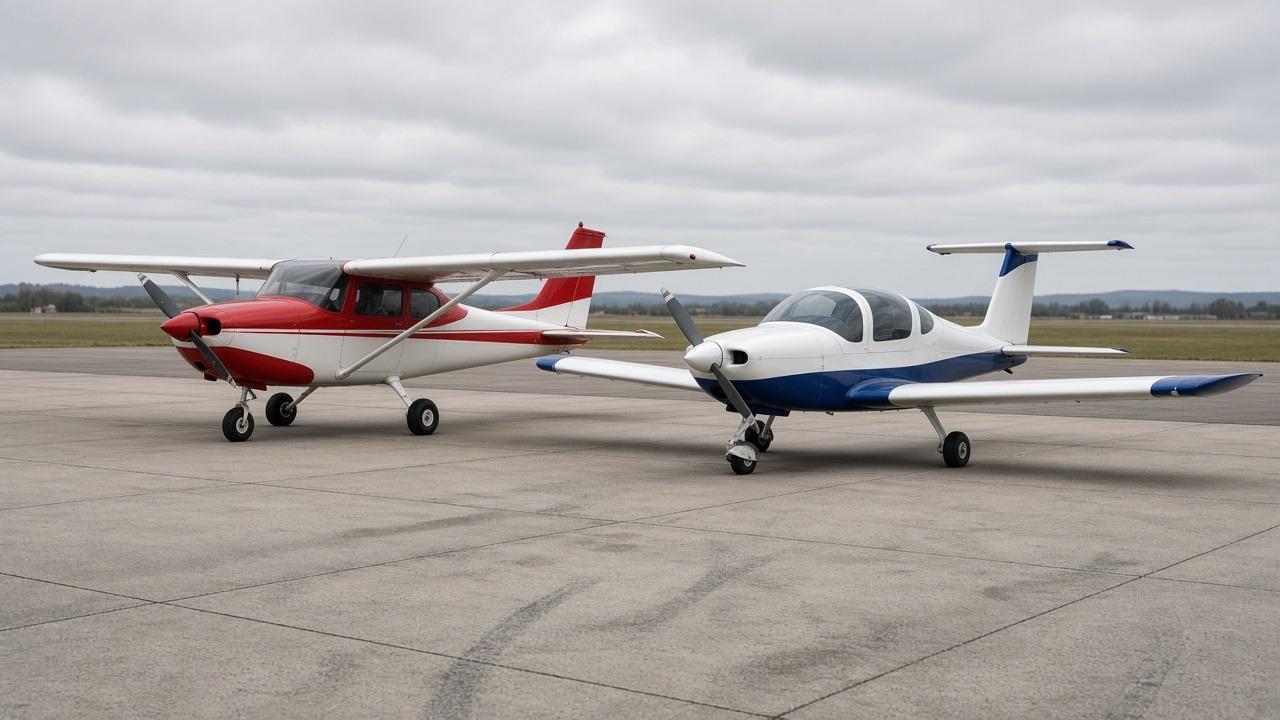
The Cessna 152 and the Piper PA-38 Tomahawk were built for the same job: training pilots economically. Thousands of UK pilots learned on one or the other, and both now make affordable first aircraft for private owners. They share an engine family and offer similar performance, but they look, feel and fly quite differently.
At a glance
- Cessna 152 — built from 1977 to 1985 as the successor to the Cessna 150. High wing, two doors, a Lycoming O-235 of around 110 hp and very gentle handling.
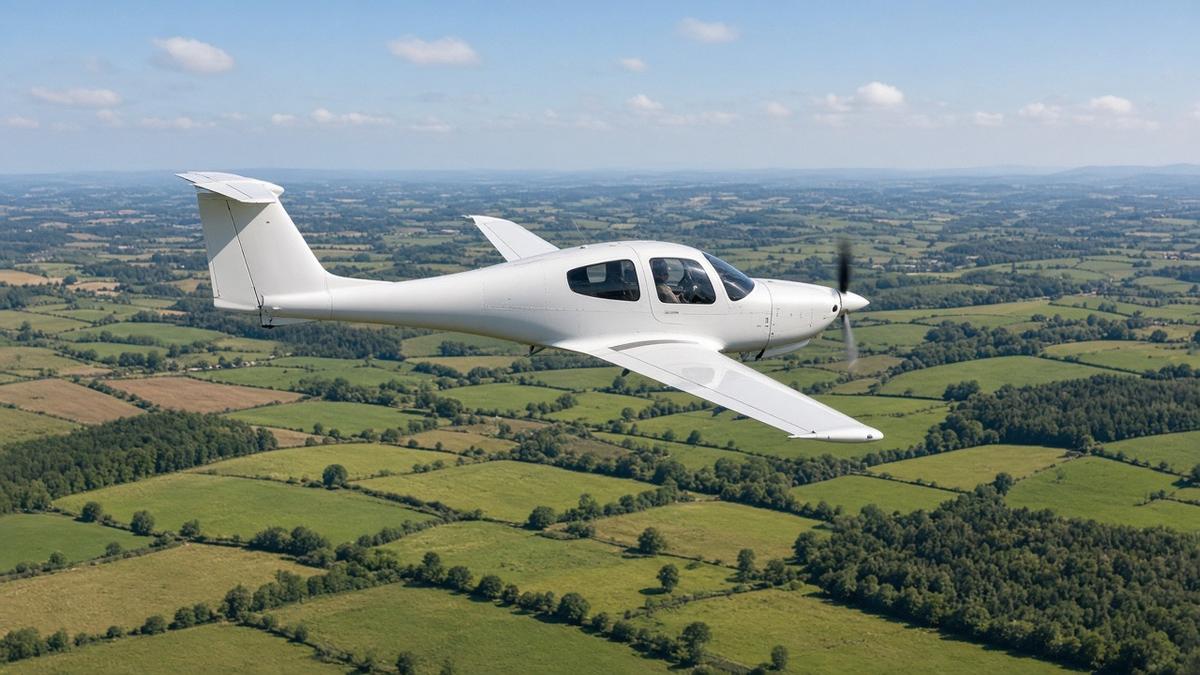
- Piper PA-38 Tomahawk — built from 1978 to 1982. Low wing, T-tail, two doors, large windows and a similar Lycoming O-235.
Both cruise at around 95–105 knots on roughly 20–25 litres of fuel an hour, so running costs are similar. Neither is fast, but both are cheap to fly and well suited to local flying and short cross-countries.
Cabin and visibility
This is where the two differ most. The Tomahawk’s cabin is noticeably wider than the 152’s, which matters with two larger adults, and its big windows and low wing give excellent all-round visibility in the circuit. The 152 is snug, but its high wing gives a good view of the ground, shade on sunny days and shelter when loading in the rain. Both have a door on each side.
Handling
The Cessna 152 is known for forgiving, predictable handling. It is reluctant to spin and recovers readily, which is one reason so many schools chose it. The Tomahawk was designed with input from instructors and has more pronounced stall and spin characteristics that demand correct recovery technique, which some instructors regard as better training. For a private owner, both are straightforward once you are familiar with them, but a Tomahawk pilot should be confident with stall and spin recovery.
Payload
Payload is tight in both. With two adults and full fuel you may be close to the maximum weight, so check the weight and balance schedule for the specific aircraft rather than relying on brochure figures. Individual aircraft vary with their equipment, and a heavy avionics fit or long-range tanks reduce what you can carry.
What to check when buying
Many examples of both types are ex-school aircraft with high airframe hours and many landings. That is fine if maintenance has kept pace, and the logbooks will tell you. Beyond the usual checks:
Cessna 152
- Corrosion in the wing and tail structure, around the wing attach points and under the floor.
- The condition of the main landing gear legs and their attachments.
- Spark plug lead fouling, a known issue with some O-235 engines on modern avgas, and how the owner manages it.
- Seat rails and seat locking mechanisms, which are subject to well-known Airworthiness Directives.
Piper PA-38 Tomahawk
- The tail and its attachments, which have been the subject of inspections and Airworthiness Directives over the years.
- Compliance with every applicable Airworthiness Directive, confirmed by an engineer who knows the type.
- Corrosion and the condition of the wing structure.
- Availability of type-specific parts, which can be harder to source than for the Cessna.
Prices and parts
Tomahawks usually sell for less than equivalent 152s, partly because of their spin reputation and partly because Cessna built far more aircraft: over 7,000 152s against around 2,500 Tomahawks. Cessna’s larger fleet means more parts, more engineers who know the type and a broader resale market. That price difference can make a well-maintained Tomahawk good value if you like how it flies.
Which should you buy?
If you want the easiest aircraft to own and sell on, with the widest parts support, the 152 is the safer choice. If you want more cabin space and better visibility and are comfortable with its handling, a good Tomahawk can be excellent value. Fly both before deciding if you can. If you are also considering four seats, our guide to the best first aircraft for a new UK pilot covers the wider options. Browse single-engine aircraft for sale, or talk to us about what you are looking for.
Frequently asked questions
Is the Piper Tomahawk safe?
Yes, when flown within its limits by a pilot trained in stall and spin recovery. Its stall and spin behaviour is more pronounced than the Cessna 152’s, so get a type familiarisation with an instructor who knows it.
Which is cheaper to run, a Cessna 152 or a Tomahawk?
Running costs are very similar, as they share an engine family and offer similar performance. Differences come mainly from the individual aircraft’s condition and how easily parts can be found.
Can two adults fly in a Cessna 152 with full fuel?
Often only just, and sometimes not. It depends on the weights of the occupants and the specific aircraft’s empty weight, so always check the weight and balance before flight.