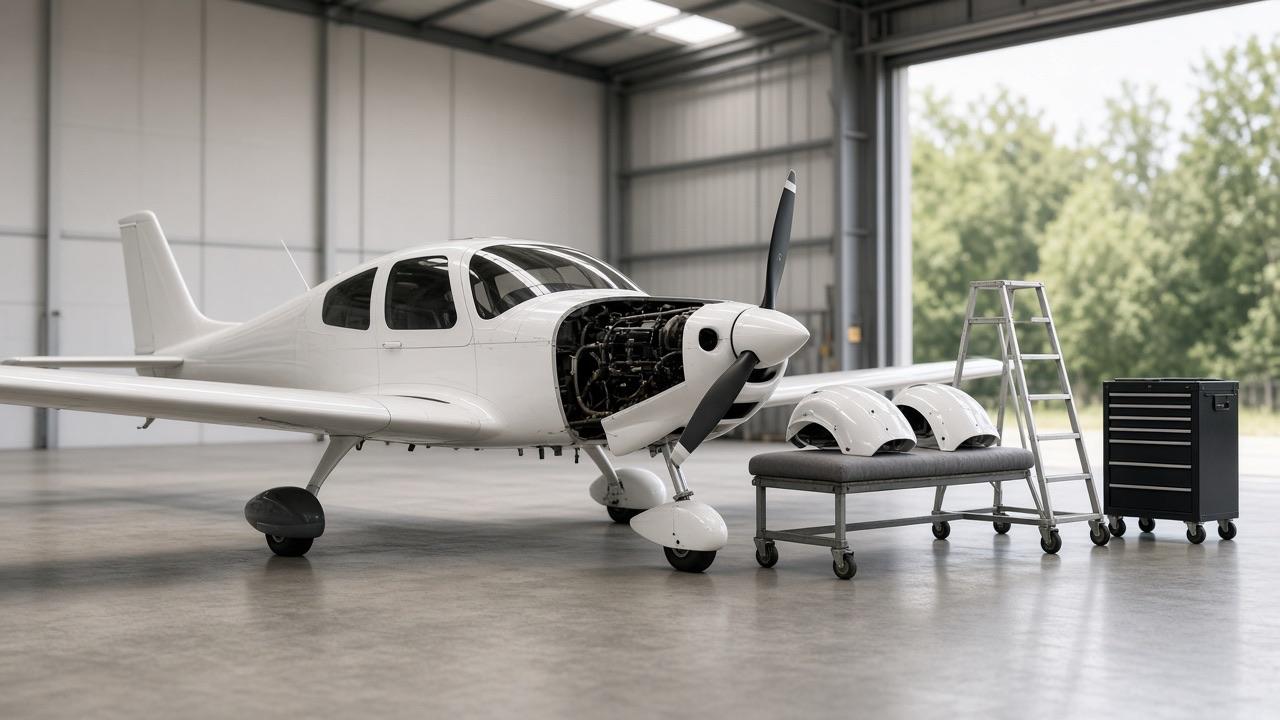
On most light aircraft the engine is the single most expensive component, and how much life it has left can account for a large part of the price. Two aircraft that look identical in an advert can differ in value by tens of thousands of pounds purely because of engine time. Understanding the numbers helps you compare aircraft fairly and avoid surprises after you buy.
What TBO means
TBO stands for time between overhauls: the manufacturer’s recommended number of hours an engine can run before it should be overhauled. For many four-cylinder Lycoming engines, such as those in the Piper PA-28, it is 2,000 hours. Other engines have different figures, and many microlights use Rotax engines with their own limits. Manufacturers also set a calendar limit, typically around 12 years for Lycoming and Continental engines, because seals, hoses and internal surfaces age even when the engine is not running.
For privately operated aircraft in the UK, TBO is generally a recommendation rather than a hard limit, and many engines run beyond it “on condition” under their maintenance programme, provided they pass regular checks. Even so, an engine past TBO will be priced accordingly, and some buyers, lenders and insurers will treat it with caution.
The abbreviations you will see
- SMOH — hours since major overhaul. The most common figure in adverts.
- SNEW or TTSN — hours since the engine was new.
- STOH — hours since a top overhaul, where the cylinders were overhauled or replaced but not the rest of the engine.
- SFRM — hours since factory remanufacture, where the manufacturer rebuilt the engine to new limits.
- TTAF — total time on the airframe, which is separate from engine time.
Our guide to reading aircraft logbooks explains how to confirm these figures against the records.
How engine time affects price
A common way to compare aircraft is to work out how much of the engine’s life has been used, then price it pro rata. If an overhaul costs around £30,000 and TBO is 2,000 hours, each hour of engine life is worth roughly £15. An engine at 500 hours since overhaul has around £22,500 of life left; one at 1,800 hours has around £3,000. All else being equal, the difference between those two aircraft is close to £20,000.
These figures are illustrative. Overhaul costs vary with the engine type, the shop, what is found when it is opened up, and whether you choose a field overhaul, an exchange engine or a factory unit, so get a current quote for the specific engine before relying on the calculation. The same approach works for running costs: our guide to the real cost of owning a light aircraft shows how to build an engine reserve into your hourly figure.

Mid-time, high-time or run-out?
- Low or mid-time — plenty of life left and fewer immediate costs, but you pay for it in the purchase price.
- High-time — a lower price, with the overhaul in view. Good value if you budget for it, particularly if you fly few hours a year.
- Run-out or past TBO — the cheapest way in, but expect to fund an overhaul or replacement engine soon. Price the aircraft as if the overhaul were due now, and treat any remaining running time as a bonus.
There is no single right answer. A buyer flying 50 hours a year with an engine 400 hours from TBO has eight years of flying before the hours alone become an issue, although the calendar limit may arrive first. A run-out engine also has one advantage: you choose who overhauls it and how.
How to judge the engine’s real condition
Hours tell you where the engine is in its life, not how healthy it is. Ask for the following, or arrange them as part of a pre-purchase inspection:
- A recent compression test, ideally with earlier results to show any trend.
- A borescope inspection of the cylinders.
- Oil analysis results, if the owner has kept them.
- Records of oil consumption and any recent cylinder work.
- Evidence of regular flying, and how the engine was stored during long breaks.
- Details of who carried out the last overhaul and what was replaced.
Remember the propeller too. Constant-speed propellers in particular have their own overhaul intervals, and an overdue propeller overhaul is a cost worth knowing about before you agree a price.
Comparing aircraft fairly
Engine time is one of the clearest ways to compare aircraft that look similar on paper. Our Piper PA-28 buyer’s guide covers what to look for in one of the most common types, and you can browse aircraft for sale in the Hangar to compare engine times for yourself. If you would like a second opinion on an aircraft you are considering, talk to us.
Frequently asked questions
Is it legal to fly a private aircraft past TBO in the UK?
For most privately operated light aircraft, TBO is a manufacturer’s recommendation, and engines can continue on condition under the maintenance programme if they pass the required checks. Your maintenance organisation can confirm what applies to a particular aircraft.
What does 1,200 SMOH mean?
It means the engine has run 1,200 hours since its last major overhaul. Compare it with the engine’s TBO to see how much life remains; for an engine with a 2,000-hour TBO, around 800 hours are left.
Should I avoid an aircraft with a run-out engine?
Not necessarily. A run-out engine can be good value if the price reflects the cost of an overhaul and you have budgeted for it. It also lets you choose who overhauls the engine.