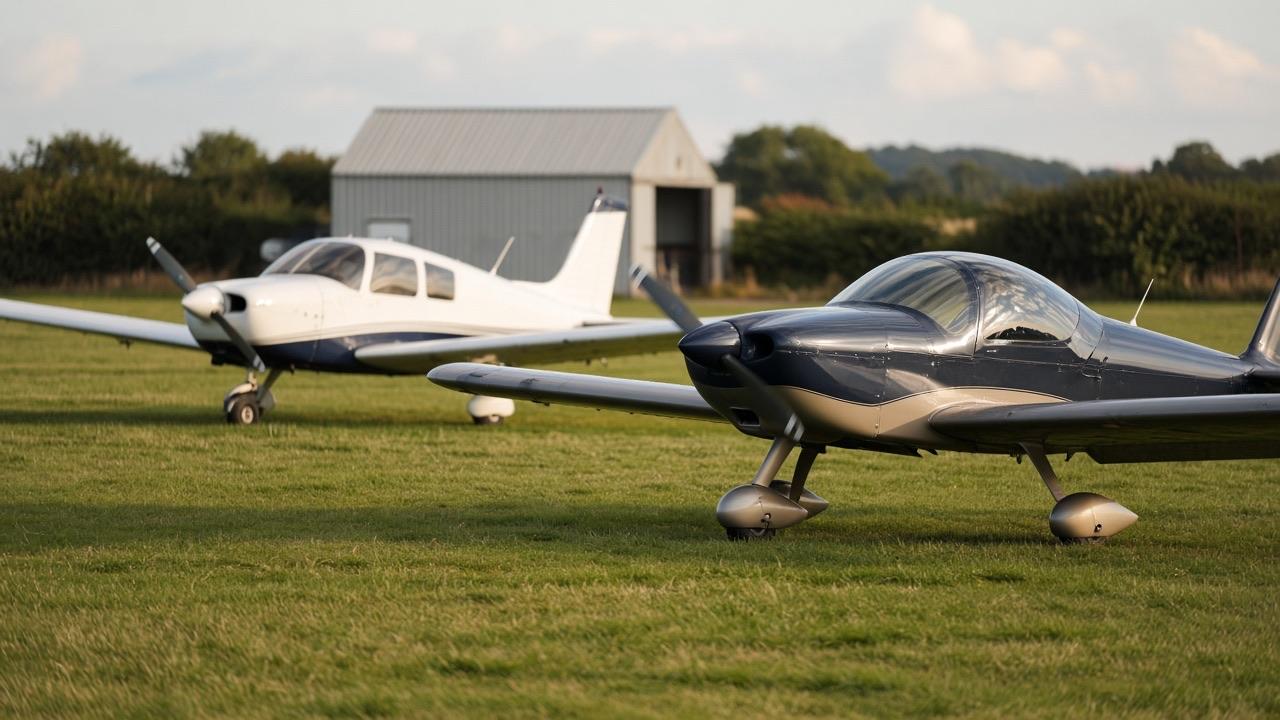
Look through UK aircraft listings and you will see two kinds of airworthiness paperwork: a Certificate of Airworthiness (CofA) with an Airworthiness Review Certificate (ARC), or a Permit to Fly. Both allow an aircraft to fly legally, but they come from different sets of rules. The difference affects how the aircraft is maintained, what it costs to run, where you can take it and who will want to buy it from you later, so it is one of the first things to check.
What a certified aircraft is
A certified aircraft is built to a type design that has been through full certification, such as the Cessna 172, Piper PA-28 or Robin DR400. It holds a Certificate of Airworthiness, and in the UK most privately operated light aircraft in this group are maintained under Part-ML, the rules carried over from EASA after Brexit. To stay airworthy it needs an approved maintenance programme, maintenance and certification by licensed engineers or approved organisations, and a valid Airworthiness Review Certificate, normally renewed every year.
Owners of certified aircraft can carry out some limited tasks themselves under pilot-owner maintenance, but most work, and anything significant, must be done and signed for by a licensed engineer. Modifications need approval, which can make even modest changes, such as fitting new avionics, slower and more expensive than on a permit aircraft.
What a permit aircraft is
A Permit to Fly is a national airworthiness approval issued by the UK CAA for aircraft that do not hold a full type certificate. The largest groups are amateur-built kit aircraft, such as the Van’s RV series and the Europa, and older or vintage types whose original manufacturer no longer supports them, such as many Austers. Microlights also fly on permits. In practice, most permit aircraft are overseen by the Light Aircraft Association (LAA), and most microlights by the British Microlight Aircraft Association (BMAA).
A permit aircraft has its permit revalidated each year after an inspection by an approved inspector. Owners are usually allowed to do much more of their own maintenance, under the inspector’s oversight, and modifications go through the association’s approval process rather than a full certification route.

The key differences for buyers
- Maintenance — permit owners can often do much of the work themselves, which can cut costs substantially. Certified aircraft need licensed engineers for most tasks.
- Running costs — permit aircraft are generally cheaper to maintain, though a well-run certified aircraft need not be expensive.
- Modifications — upgrades are usually simpler and cheaper on permit aircraft; certified aircraft need approved modifications.
- Flying abroad — a UK Permit to Fly is not an ICAO-standard certificate, so flying abroad may need permission from each country you visit. Many European countries accept UK permit aircraft, but check before you go.
- Use — permit aircraft are intended for private flying and generally cannot be used for commercial work such as hire to the public. There are limited exceptions, such as some flying instruction for owners, so check the current rules if this matters to you.
- Operating limits — the permit may carry conditions, for example on night or instrument flying. Read the permit and its conditions, not just the headline.
Which is better value?
Neither system is better in itself; it depends on how you fly. If you plan to tour abroad often, want to use the aircraft for hire or want the widest choice of engineers, a certified aircraft is usually the better fit. If you mostly fly in the UK, enjoy being hands-on and want low running costs, a permit aircraft can be excellent value. Many kit aircraft also offer performance that is hard to match in a certified aircraft of a similar price.
Resale is worth thinking about too. The market for popular certified four-seaters is broad, while some permit types appeal to a narrower group of buyers. Well-known permit types with good build quality hold their value well; one-off or poorly documented kit aircraft can be harder to sell.
What to check when buying a permit aircraft
- Who built it, and whether the build records and LAA or BMAA paperwork are complete.
- That the permit is current and that any modifications are recorded and approved.
- The condition of the structure, particularly on older wooden or fabric-covered types.
- Whether an inspector who knows the type is available near where you will keep it.
For certified aircraft, the checks in our guides to reading aircraft logbooks and pre-purchase inspections apply. For permit aircraft, use an inspector with experience of the type, and allow time to go through the build and modification records properly.
Microlights and SSDR aircraft
Most microlights fly on a Permit to Fly, usually administered by the BMAA or LAA. Single-seat deregulated (SSDR) aircraft go further: they have no permit at all, and the pilot is responsible for deciding that the aircraft is fit to fly. If you are weighing up microlights, our guide to flex-wing and three-axis microlights explains the options.
Making the choice
Whichever route suits you, build the airworthiness system into your budget and plans from the start. Our guide to buying a used light aircraft covers the full process, and you can browse the Hangar to see what is available. If you are unsure which kind of aircraft fits your flying, talk to us.
Frequently asked questions
Can I fly a permit aircraft abroad?
Often, yes, but a UK Permit to Fly is not an ICAO-standard certificate, so you may need permission from each country you plan to visit. Many European countries accept UK permit aircraft under standing arrangements; check the current rules for every country on your route before you go.
Is a permit aircraft cheaper to own?
Usually, because owners can do more of the maintenance themselves and modifications are simpler. The saving depends on the type, its condition and how much work you are willing and able to do.
Can a certified aircraft move onto a permit?
Some older types whose manufacturers no longer support them have moved to the LAA permit system, but it is not an option for every aircraft. Ask the LAA whether a particular type is eligible.