
For many UK pilots, a share in a group-owned aircraft is the sweet spot between renting and sole ownership. You get access to a known aircraft, usually at a fraction of the cost of owning one outright, and you share decisions with a small number of like-minded pilots.
How a group is structured
A group is a number of pilots who jointly own an aircraft, commonly between four and twelve members. The aircraft may be owned directly by the members, or by a company in which each member holds shares. Either way, a written group agreement sets out how the group is run, how costs are shared and what happens when someone wants to leave.
What it costs
- The share price — your portion of the aircraft’s value, paid once when you join and recovered when you sell your share.
- A monthly fee — covers fixed costs such as insurance, hangarage and the maintenance reserve.
- An hourly rate — covers fuel, oil and the engine reserve, and is often charged “wet” (including fuel).
Because the fixed costs are split between members, group flying is usually much cheaper per hour than sole ownership. Our breakdown of the cost of owning a light aircraft shows why fixed costs dominate for low-hours owners.
Bookings and availability
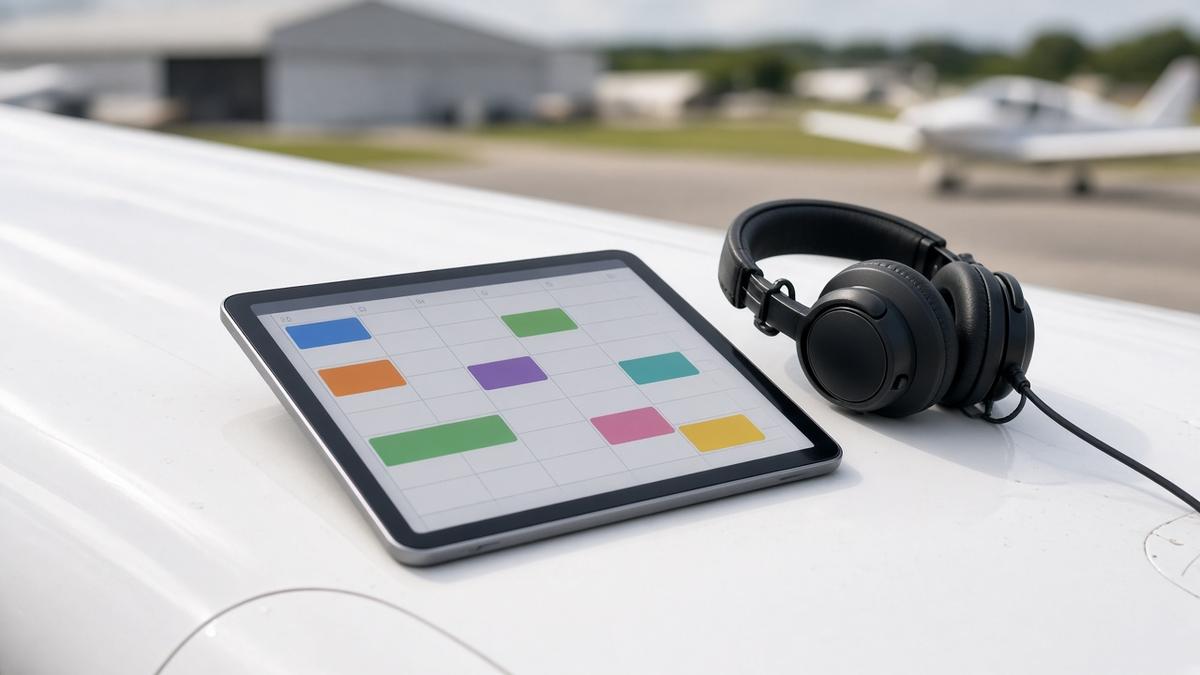
Most groups use an online booking system. Typical rules limit how far ahead you can book, how many weekend days you can hold at once and how long you can take the aircraft away for touring. The ratio of members to aircraft is the best guide to availability: fewer members means easier booking but a higher monthly fee.
What to check before joining
- The group agreement, including how decisions are made and how disputes are resolved.
- The aircraft’s condition, engine hours and the size of the maintenance reserve.
- Insurance cover, including any minimum experience requirements for members.
- How shares are valued and sold, and whether there is a waiting list of buyers.
- Any planned upgrades or big expenses that members will be asked to fund.
Forming your own group
Some pilots buy an aircraft and then sell shares in it, or get together with friends to buy one jointly. Agree the group rules before you buy, not after, and take advice on ownership structure and insurance. When the time comes to find the right aircraft, browse the Hangar or read our buying guide.
Frequently asked questions
Can I fly a group aircraft abroad?
Usually, yes, subject to the group’s rules on how long the aircraft can be away and any insurance territorial limits.
What happens if the aircraft needs expensive maintenance?
Groups normally fund maintenance from a reserve built up through monthly and hourly charges. If the reserve is insufficient, members may be asked for a contribution.
Is a share a good way to build hours?
It can be, though booking limits may restrict intensive flying. See our guide on hour building for alternatives.