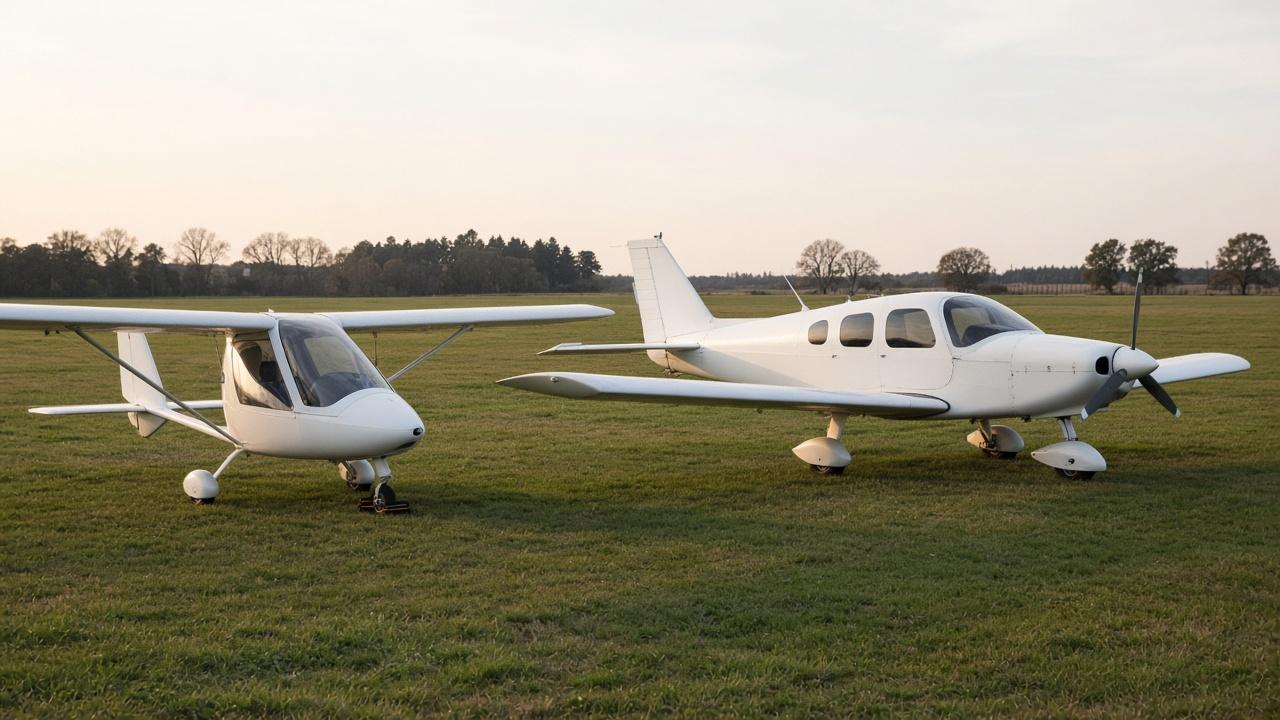
Microlights are a fantastic way to learn to fly, and many pilots stay with them for life. Others eventually want to carry more passengers, tour further, or fly certified aircraft. Moving from a microlight to a single-engine piston (SEP) aircraft is a well-trodden path, and your microlight experience gives you a strong head start.
Why pilots make the move
- Carrying two or three passengers rather than one.
- More range, payload and comfort for touring.
- Access to group shares, rental fleets and a wider aircraft market.
- Further ratings, such as night or instrument ratings.
Your licence options
Depending on what you hold now and what you want to do, the usual routes are adding an SEP class rating to a national licence, or gaining a LAPL or PPL for aeroplanes. Your microlight hours can often be credited towards the training, reducing the hours you need. The rules on credit are detailed, so speak to a flying school about your specific licence and logbook. Our guide to the PPL and LAPL explains the differences between those licences.
What changes in the cockpit
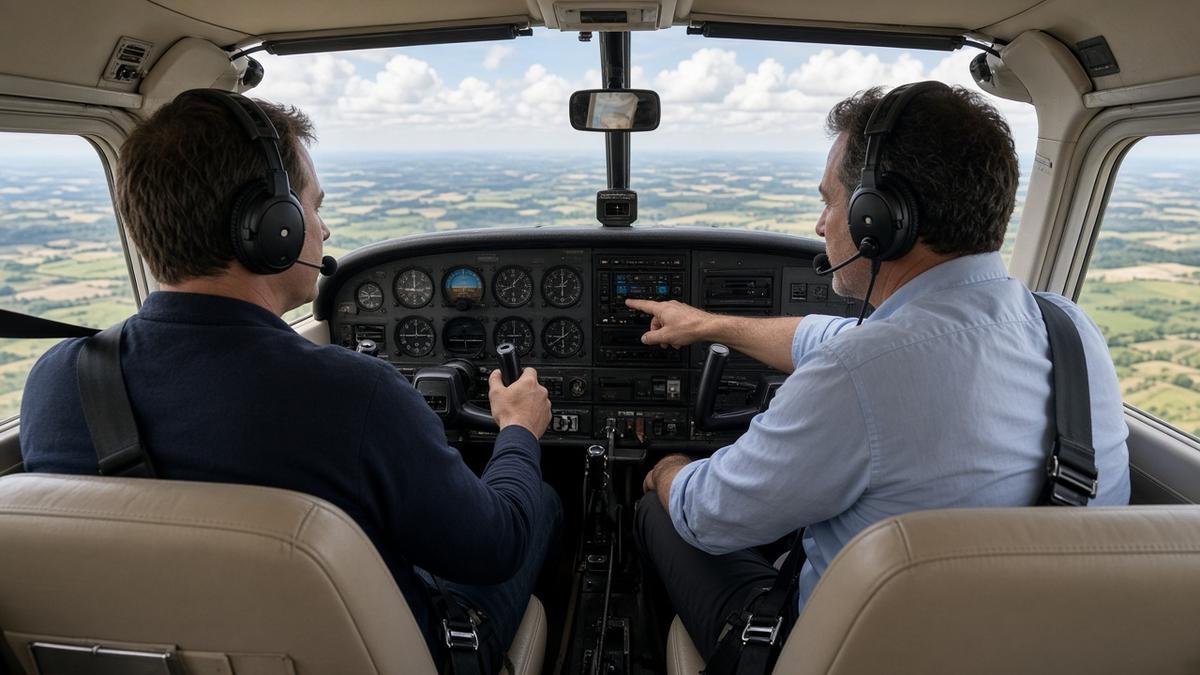
If you fly a three-axis microlight, the controls will feel familiar. The differences are mostly about mass, systems and procedures:
- Heavier, more stable handling — SEP aircraft feel more solid and take more effort to manoeuvre.
- Higher speeds — approach and landing speeds are faster, and planning needs to stay ahead of the aircraft.
- More systems — mixture control, carburettor heat, fuel selectors and sometimes a variable-pitch propeller.
- Weight and balance — with four seats and more fuel, loading calculations matter more.
Flex-wing pilots will need to learn three-axis control, which takes a little longer but builds on their airmanship and navigation experience.
Making the most of your training
A conversion goes faster when you arrive prepared. Read the flight manual for the training aircraft before your first lesson, learn its speeds and checklists, and practise weight and balance calculations at home. Flying lessons close together, rather than once a month, helps new habits stick. Ask your instructor to include a cross-country to an unfamiliar airfield, so you experience the higher workload of a faster aircraft in busier airspace before you fly it alone. Once you are qualified, a few hours with an experienced pilot in the type you plan to buy is time well spent.
Choosing your first SEP aircraft
Many pilots moving up from microlights choose a forgiving four-seater such as a Piper PA-28 or Cessna 172. Our comparison of the two will help you decide. If you own a microlight now, you might sell it to fund the move; read about microlight types to understand how buyers see yours, and browse single-engine aircraft for sale.
Frequently asked questions
Will my microlight hours count?
Often, yes, at least in part. The exact credit depends on your licence and experience, so ask a flying school to assess your logbook.
How long does a conversion take?
It varies, but experienced three-axis microlight pilots often need considerably less training than an ab initio student.
Can I keep flying microlights too?
Yes. Many pilots keep their microlight rating current alongside SEP flying.